
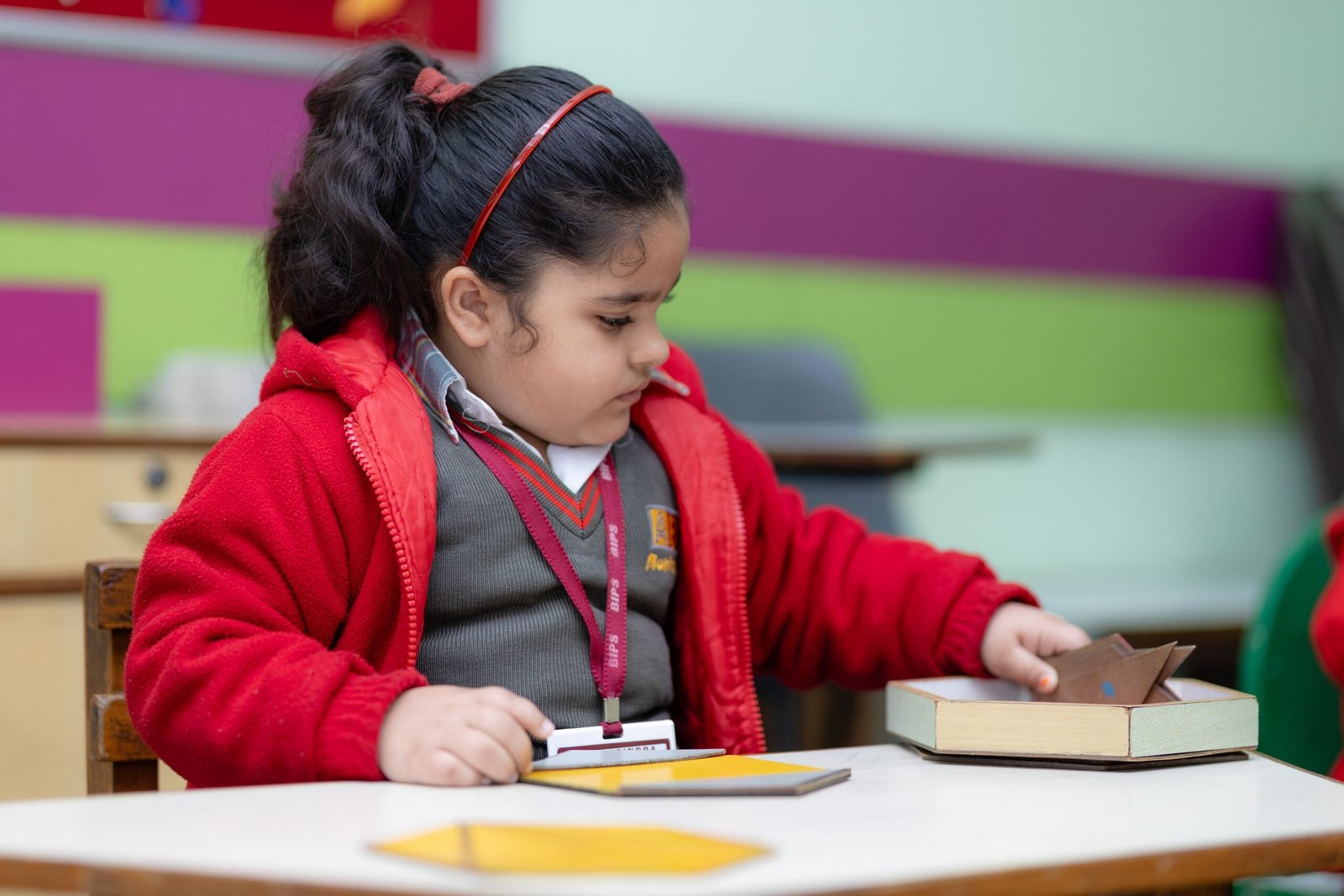
Choosing a school for your child is one of those decisions that can take weeks—or even months. Parents compare websites, visit campuses, speak to other parents, check fees and try to understand what each school actually offers beyond the prospectus.
And honestly, there is no single feature that makes a school right for every child.
A school may have impressive infrastructure, but parents may prefer a more personal classroom environment. Another may have strong academics but fewer opportunities in sports or the arts. The important thing is to look at the complete picture and ask whether the school matches your child’s learning needs, personality and future plans.
If you are currently comparing CBSE schools in Faridabad, here are ten practical things worth considering before making a decision.
1. Check the CBSE Curriculum and Academic Approach
The first thing to check is whether the school is affiliated with CBSE and, more importantly, how it delivers the curriculum.
A good education should not be limited to memorising chapters before examinations. Children need opportunities to understand concepts, ask questions, solve problems and apply what they learn.
Homerton Grammar School follows the CBSE curriculum and describes its educational philosophy as focused on critical thinking, creativity, problem-solving and modern teaching methods.
When visiting a school, parents can ask teachers how lessons are conducted rather than simply asking about board results.
2. Look at the Teacher-Student Ratio
The number of students in a classroom can have a direct effect on the amount of attention a teacher can give.
In a very large classroom, it may be harder for a teacher to notice every child’s questions, strengths or areas where additional support is needed.
Homerton Grammar School says it uses optimised class sizes to provide personalised attention. Its current campus information lists a student-teacher ratio of 25:1, while another school page refers to a 1:28 ratio, so parents should confirm the applicable ratio for their child’s grade directly with the school.
For families searching for the Best School in Faridabad, classroom size is therefore worth discussing during a campus visit.
3. Don’t Ignore the Learning Environment
Walk into a classroom and observe what is happening.
Are students engaged? Do they look comfortable asking questions? Are teachers interacting with them? Does the classroom feel organised without being overly restrictive?
These small observations can tell parents things that a brochure cannot.
A positive learning environment should encourage children to participate rather than simply sit quietly and copy notes. Homerton Grammar describes its approach as child-centric, with an emphasis on active participation and personalised learning.
4. Ask About Sports and Extracurricular Activities
School life should not revolve entirely around textbooks and examinations.
Sports, music, dance, drama, art and other activities give children opportunities to discover interests that may not appear during regular academic lessons.
Homerton Grammar School’s campus information highlights indoor and outdoor sports facilities, while its published school information also describes opportunities across sports, arts and cultural activities.
Parents should ask how frequently students actually participate in these activities. Having a facility on campus is one thing; giving children meaningful opportunities to use it is another.
5. Look at Technology and Future-Ready Learning
Technology is now part of almost every profession, so children need more than basic computer knowledge.
Parents can check whether the school provides opportunities to learn coding, robotics, artificial intelligence or other technology-related subjects in an age-appropriate way.
Homerton Grammar School states that Robotics and Artificial Intelligence are integrated into its learning approach and that it has a dedicated Robotics & AI Lab.
The important question is not simply whether a school has modern equipment. Ask how students use that equipment and whether learning is practical and project-based.
6. Consider Safety and Transport
Safety should never be treated as a secondary concern.
Parents should look at security arrangements around the campus, classroom areas, entry and exit points and school transport.
Homerton Grammar School highlights CCTV surveillance and safety measures across its campus. Its published material also discusses transport arrangements and security practices.
If your child will use school transport, ask about routes, supervision, tracking, staff and what happens in an emergency.
These are not uncomfortable questions. They are sensible ones.
7. Check the Facilities, but Think About How They Are Used
Modern classrooms and attractive buildings can certainly make a school appealing. But infrastructure should support learning rather than simply look impressive.
Parents can look at:
- Science and computer laboratories
- Library facilities
- Smart classrooms
- Sports areas
- Music and dance spaces
- Art facilities
- Medical or infirmary facilities
- Outdoor play areas
Homerton Grammar’s published campus information includes smart classrooms, sports facilities and spaces designed for different learning and creative activities.
During a school visit, ask whether students regularly get access to these facilities as part of their normal learning experience.
8. Find Out How the School Supports Individual Students
Not every child learns at the same speed.
Some children may need additional academic support, while others may need encouragement to take on more challenging work. Some may be confident in mathematics but hesitant when speaking in front of others.
A school should have a way of recognising these differences.
Homerton Grammar describes its educational approach as identifying and nurturing individual strengths and providing personalised attention.
Parents should ask how teachers identify learning gaps and how the school communicates progress with families.
9. Look at the School’s Values and Culture
Children spend a large part of their growing years at school. Naturally, the environment around them can influence how they interact with others.
Parents may want to understand how the school approaches discipline, respect, teamwork, leadership and responsibility.
Homerton Grammar’s stated educational philosophy includes developing confidence, teamwork, communication and values alongside academic learning.
You can often learn a lot about school culture simply by speaking with teachers and observing how students behave during a campus visit.
10. Think About Your Child, Not Just the School’s Reputation
This may be the most important point of all.
A school can be highly regarded and still not be the right fit for every child.
Think about your child’s personality and interests.
Is your child highly academic? Very active? Creative? Quiet? Social? Curious about technology? Interested in sports or performing arts?
The right school should provide an environment where your child can develop those strengths while also working on areas that need improvement.
Parents researching Top CBSE Schools in Faridabad should therefore create their shortlist based on their child’s needs rather than relying only on rankings or recommendations from friends.
Questions to Ask During a School Visit
Once you have shortlisted a few schools, take a written list of questions with you. It is surprisingly easy to forget important things during an admission meeting.
You could ask:
- What is the typical class size?
- How do teachers provide individual attention?
- What extracurricular activities are available?
- How often do parents receive academic updates?
- What technology is included in classroom learning?
- What safety measures are followed?
- How does the school support students who need additional help?
- What opportunities are available for leadership and public speaking?
- How much time do students spend on sports and creative activities?
The answers can help you compare schools on things that actually matter to your family.
Visit the Campus Before Making the Final Decision
A website can give you information, but it cannot completely recreate the experience of walking through a school.
If possible, visit the campus while classes are taking place. Look at the classrooms, speak with teachers, observe students and ask questions.
Pay attention to how staff respond to your questions. Are they willing to explain things clearly? Do they understand your concerns? Do they seem interested in your child’s needs?
Sometimes the overall atmosphere tells you more than a long list of facilities.
What Makes a School a Good Fit?
There is no universal checklist that guarantees a perfect school.
For one family, proximity may be the deciding factor. For another, it may be academics, sports or technology. Someone else may place greater importance on class size, student support or school culture.
That is why parents should compare schools carefully rather than choosing based on one attractive feature.
Homerton Grammar School combines CBSE education with a stated focus on holistic development, personalised attention, sports, technology, arts and life skills. The school says it has more than four decades of educational experience and a five-acre campus in Faridabad.
These are useful points for parents to consider as part of a wider school comparison.
Final Thought
Choosing a school is ultimately about finding the right environment for your child to learn and grow.
Academic performance matters, but so do teachers, classroom size, safety, sports, technology, creativity, communication and the values children experience every day.
If you are comparing the Best School in Faridabad or researching Top CBSE Schools in Faridabad, take your time, visit shortlisted schools and ask questions that go beyond fees and facilities. The right decision is not necessarily about finding the school with the longest list of features—it is about finding a place where your child feels supported, challenged and comfortable enough to become a confident learner.
